When World Cup Mascots Make the Arrest: Peru’s Police Pull Off the Ultimate Disguise
Clutch and Maple Were on Duty — Just Not the Duty You’d Expect
It turns out that FIFA’s 2026 World Cup mascots, Clutch and Maple, have a crime-fighting side hustle.
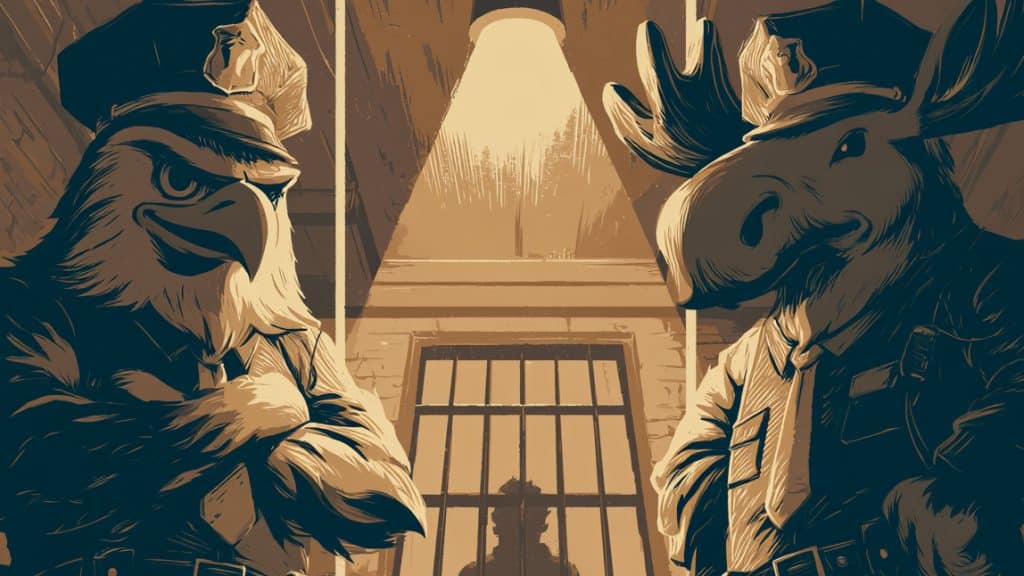
On June 12, 2026 — the opening day of the 2026 FIFA World Cup — Peruvian police officers, disguised as the tournament’s official mascots, helped take down a suspected drug dealer in Lima. The operation was led by Col. Carlos Alcántara, commander of the Green Squadron, a specialized unit focused on combating street crime. Their target: Carlos Cabrera, 48, a known drug suspect with one very exploitable weakness — he was absolutely obsessed with soccer.
The Setup: Intelligence Work Meets World Cup Fever
Investigators had determined that Cabrera was a self-described diehard football fan, fully swept up in the excitement of the opening day. That fan enthusiasm became the tactical opening they needed. Two officers suited up in the official Clutch (bald eagle, USA) and Maple (moose, Canada) mascot costumes approached the suspect’s location without raising suspicion, then, alongside plainclothes colleagues waiting outside, breached the door with a metal sledgehammer. The entire operation was captured on video and posted to social media by Peru’s national police force.
Inside, officers recovered 2,524 packets of cocaine base and a firearm. In Peru, micro-trafficking of cocaine base — defined as possession of 5 to 50 grams — carries a sentence of three to seven years in prison.
Who Are Clutch, Maple, and Zayu?
For the record, the mascots pressed into service that day represent two of the three 2026 FIFA World Cup host nations. Clutch is a bald eagle representing the United States. Maple is a moose representing Canada. Zayu — the third member of the trio — is a jaguar representing México. All three were unveiled by FIFA to embody the spirit and culture of each co-host country for the first-ever tri-nation World Cup tournament.
They were not, to our knowledge, trained in hand-to-hand combat. But give it time.
Peru’s Police Have Done This Before — A Lot
This was far from the first time Peru’s law enforcement has leaned into creative costuming. Officers have previously shown up to arrests dressed as the Grinch, Freddy Krueger, Deadpool, Wolverine, and Santa Claus. In February 2024, a plainclothes officer in a full bear costume — carrying balloons and Valentine’s Day gifts — successfully lured a female drug suspect out of her home without incident.
Apparently, in Peru, if you answer the door for a giant stuffed animal bearing flowers, that’s entirely on you.
Why This Matters to the Mascot World
Beyond the obvious humor, this incident is a genuine cultural moment in mascot history. The fact that a law enforcement unit specifically chose World Cup mascot costumes — not generic disguises, not ski masks, not fake delivery uniforms — as their tactical tool speaks volumes about how deeply these characters embed themselves in public consciousness during major sporting events.
Mascots aren’t just for kids and halftime shows. They project trust, approachability, and joy. Peru’s Green Squadron understood that instinctively. A bald eagle and a moose carrying sledgehammers are still, somehow, less threatening at first glance than a plain-clothes officer. That’s the power of a great mascot costume — and also a very good reason to always check the eyeholes.
Mascot Trivia: The Other Side of the Costume
The performers in professional mascot costumes typically train for months in movement, crowd interaction, and safety protocols. Visibility inside a full mascot head is severely limited — most performers rely on mesh panels near the mouth or chest to see. The average mascot costume for a professional sports team weighs between 15 and 40 pounds and can raise the wearer’s internal temperature dramatically within minutes. Whether Peru’s officers had that briefing before suiting up is unknown — but their commitment to the bit was clearly solid.
For more on the FIFA 2026 World Cup mascots Clutch, Maple, and Zayu, visit the official FIFA World Cup 2026 site.